The Most Dangerous Cost of Trump’s War with Iran
Americans are right to worry about the growing cost of Donald Trump’s disastrous war of choice against Iran. As tragic as the toll is in tens of billions spent, 13 U.S. service members killed and hundreds more wounded, the opportunity costs are even more horrifying to contemplate. That is to say, the stunning depletion of vital munitions inventories in Trump’s Iranian “excursion” is leaving the United States much more vulnerable in places where the national security stakes and economic impact are far higher.
Places, for example, like Taiwan.
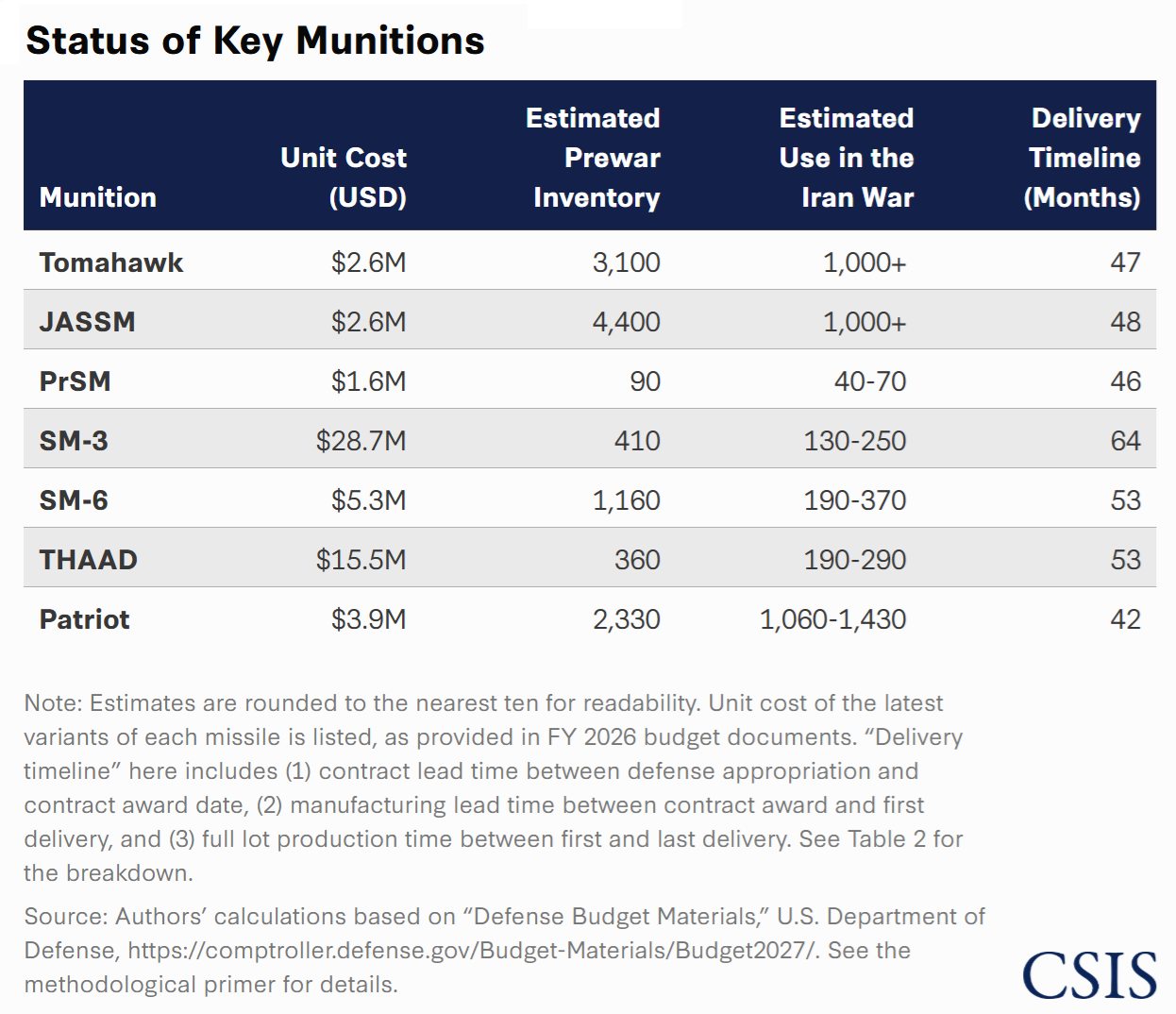
As CNN reported Tuesday, assessments from the Pentagon and the Center for Strategic and International Studies paint a grim picture:
“The US military has significantly depleted its stockpile of key missiles during the war with Iran and created a ‘near-term risk’ of running out of ammunition in a future conflict should one arise in the next few years, according to experts and three people familiar with recent internal Defense Department stockpile assessments.
Over the last seven weeks of war, the US military has expended at least 45% of its stockpile of Precision Strike Missiles; at least half of its inventory of THAAD missiles, which are designed to intercept ballistic missiles; and nearly 50% of its stockpile of Patriot air defense interceptor missiles, according to a new analysis conducted by the Center for Strategic and International Studies. Those numbers closely align with classified Pentagon data about US stockpiles, according to the sources familiar with the assessment.”
Mark Cancian, a retired US Marine Corps Colonel and one of the authors of the CSIS report, explained, “The high munitions expenditures have created a window of increased vulnerability in the western Pacific.” Worse still, he noted, “It will take one to four years to replenish these inventories and several years after that to expand them to where they need to be.”
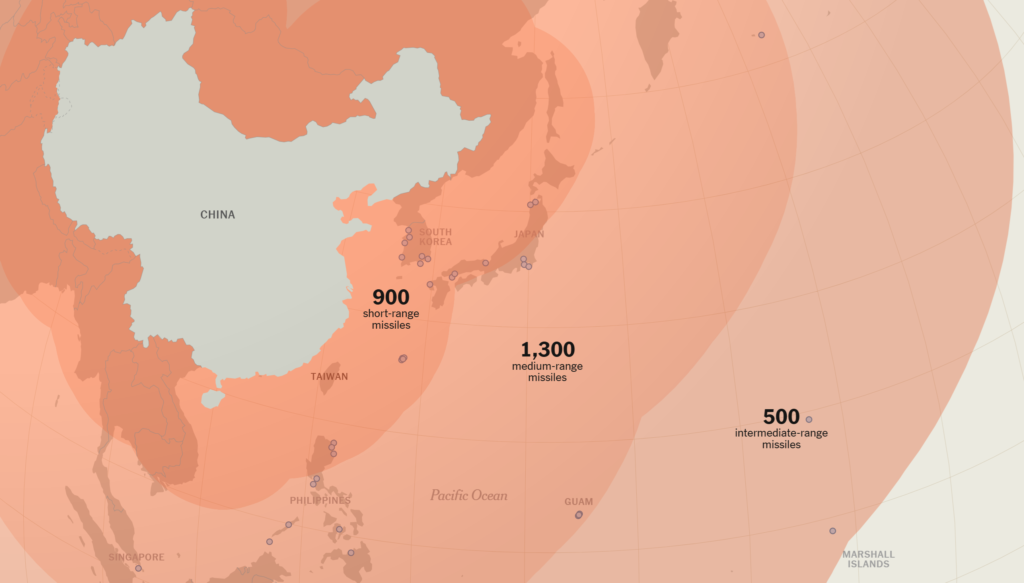
And where those inventories need to be is very, very full. As a Microsoft Copilot round-up of war gaming for a possible Chinese attack on Taiwan reveals, the prospect of a “successful” defense of the island by the U.S. and Japan is uncertain at best. Most assessments assume massive Chinese first strikes against American forward bases in Guam, Japan, South Korea and the Philippines as well as U.S. carrier task forces to prevent allied intervention against Beijing’s invasion campaign. China’s growing “A2/AD” (anti‑access/area denial) advantage would be a daunting challenge in ideal circumstances. The dwindling stocks of air defense and long-range missile supplies are far from ideal.
That’s a frightening picture, given the grim assessment the Pentagon’s 2021 “Overmatch Brief” provided. As the New York Times warned in December 2025 before Trump commenced his war on Iran:
The picture it paints is consistent and disturbing. Pete Hegseth, the secretary of defense, said last November that in the Pentagon’s war games against China, “we lose every time.” When a senior Biden national security official received the Overmatch brief in 2021, he turned pale as he realized that “every trick we had up our sleeve, the Chinese had redundancy after redundancy,” according to one official who was present.
As Copilot summed it up, there is “no clean, low-cost U.S. win.”
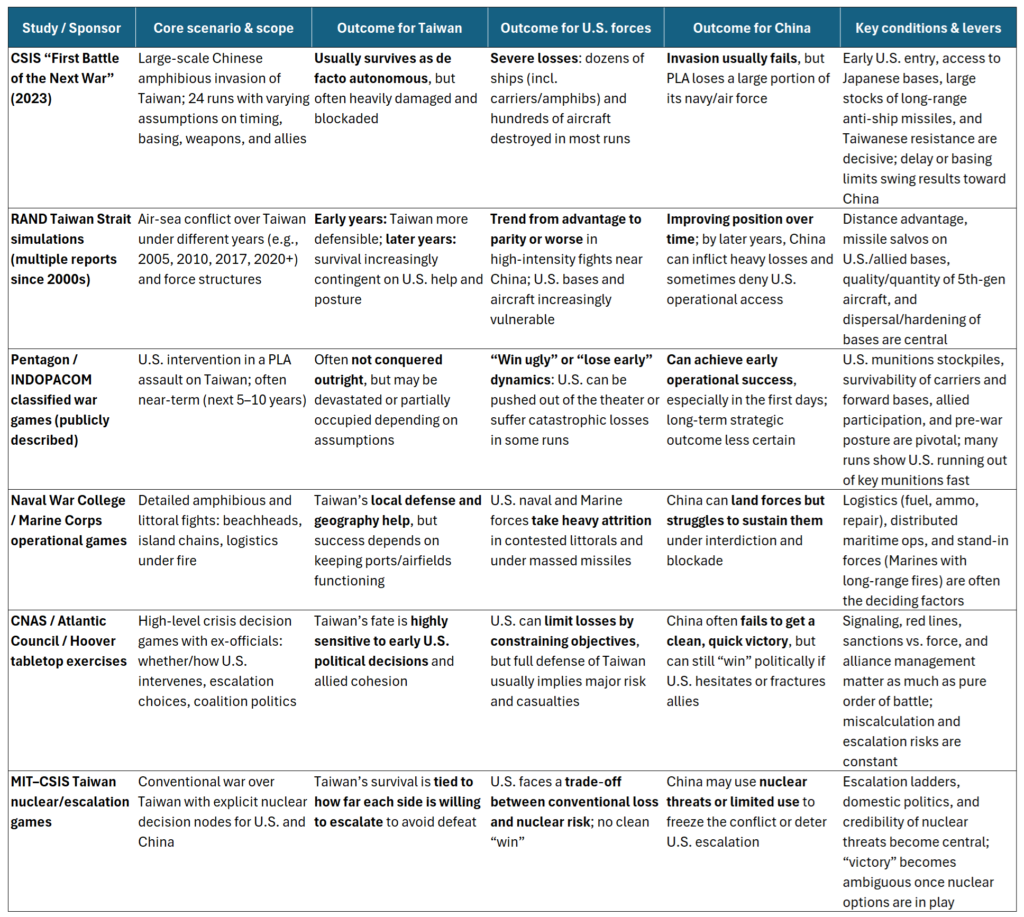
The shared conclusion across the war games is that “a U.S. decision to fight for Taiwan usually means huge losses in ships, aircraft, and bases, even when the U.S. ‘wins’ in the sense of preventing a successful conquest.” Even assuming a rapid, joint response by Washington and Tokyo, a successful defense of Taipei comes down to one factor:
“Logistics and munitions are the quiet killers. Long‑range anti‑ship missiles, submarine torpedoes, and air‑defense interceptors are expended quickly. Many games end not because one side runs out of platforms, but because it runs out of usable, survivable munitions and logistics capacity.”
Right now, the side that will “run out of platforms” in a war for Taiwan in the United States. Given Taiwan’s central role in America’s high-tech economy that outcome would be catastrophic for the United States. And thanks to President Trump’s reckless and unnecessary adventure in the Persian Gulf, that cataclysm is much more likely than it was just two months ago.
To put it another way, by jeopardizing America’s ability to successfully deter, fight and defeat Chinese threats to the western Pacific, Trump’s misguided war against Tehran means United States may pay the steepest opportunity cost of all.